
Wrestling with Nature-Based Solutions

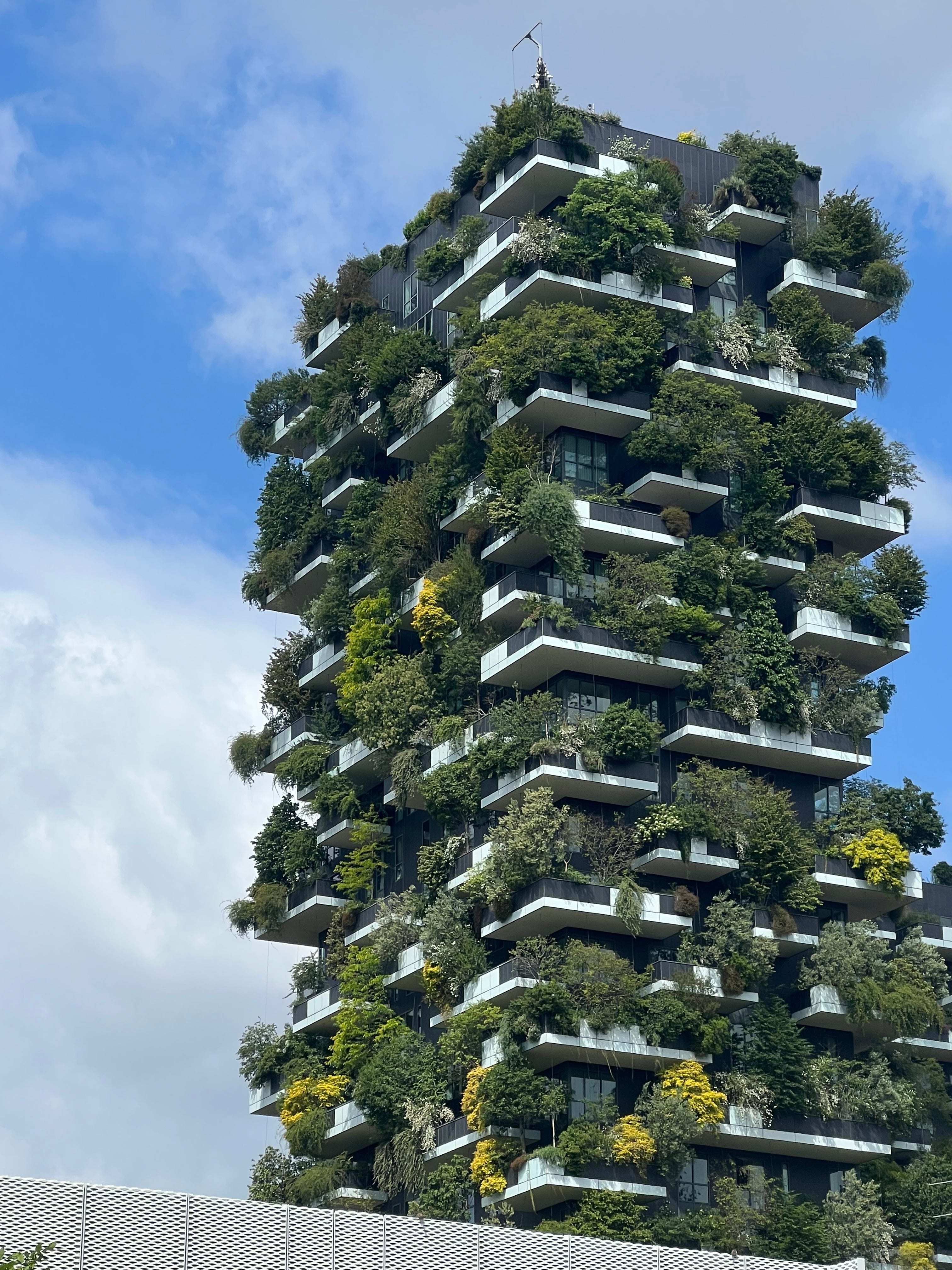
So-called “nature-based solutions” are strategies that use or work with nature to address challenging problems like climate change and disaster risk (Cohen-Schacham et al., 2016; Nesshöver et al., 2017). They cover a wide range of ecosystem types and address a variety of societal challenges (Dunlop et al., 2024).
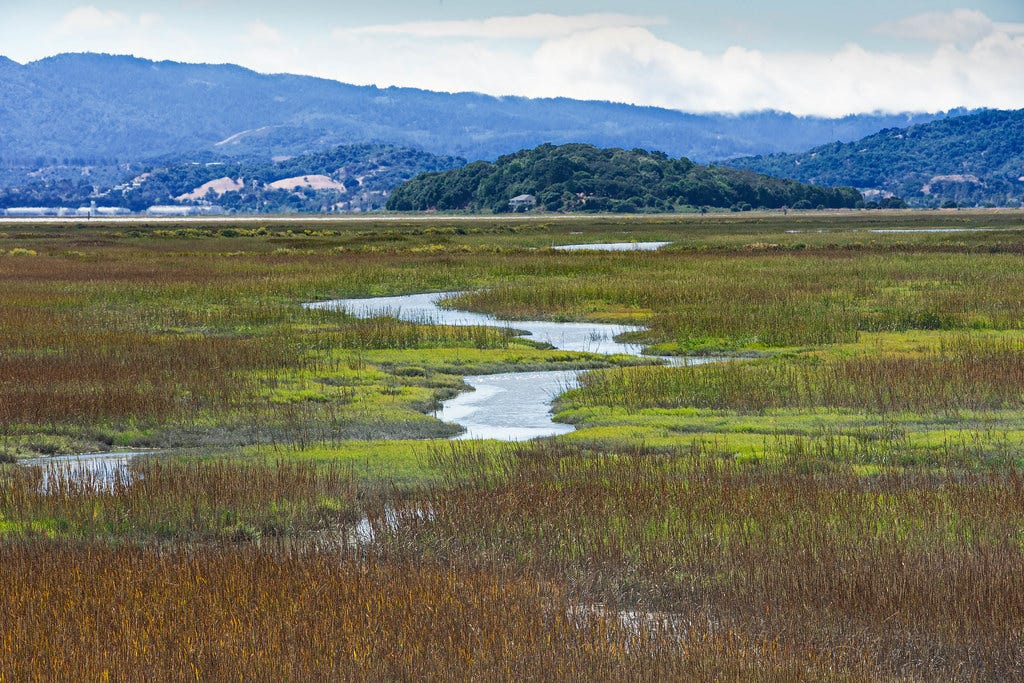
One of their important selling points is that they are “multi-benefit” strategies (Dunlop et al., 2024) For example, restored wetlands can contribute to flood control, pollution reduction and biodiversity (Ferreira, et al., 2023).
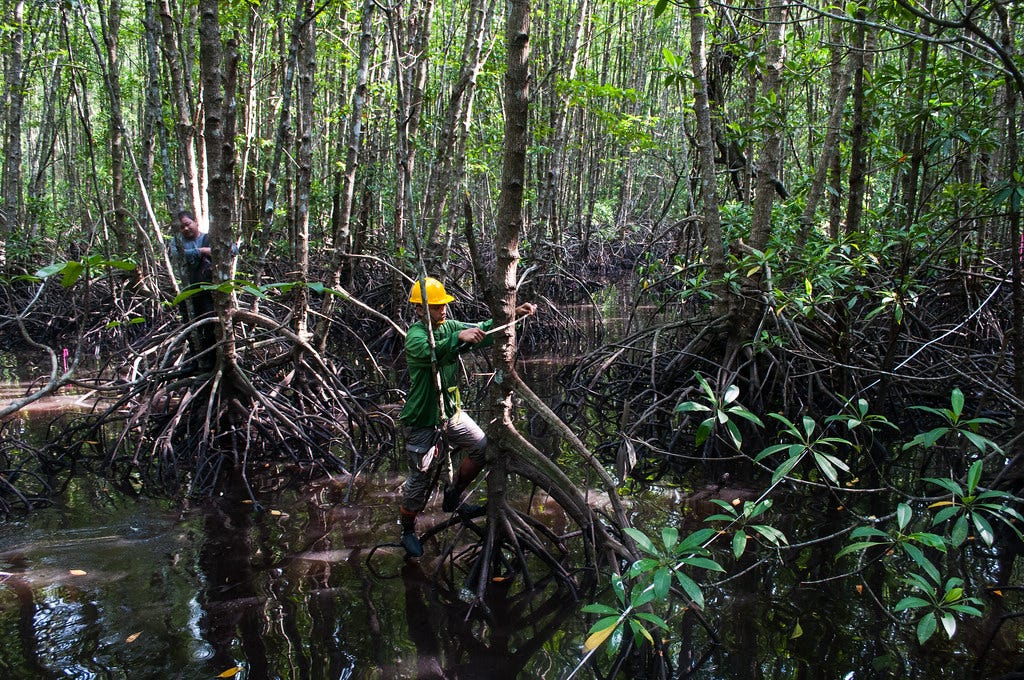
They are also billed as cost-effective (Seddon et al. 2020). Preserving or restoring mangrove forests, for example, is a highly cost-effective way of providing flood control and carbon sequestration (Su, Friess and Gasparatos, 2021; Beck, 2022; Goto et al., 2025).
If nature-based solutions are so attractive, why aren’t they more prevalent? The thumbnail answer is that it isn’t easy to “mainstream” or “implement” these solutions (Croeser et al., 2021; Seddon, 2022; Adams et al., 2023).
Why? Here are some of the specific reasons that researchers have identified:
Lack of knowledge and expertise: Research points to the lack of knowledge and expertise about the potential for and the implementation of nature-based solutions (Dorst et al., 2022; Christopher et al., 2024; Aguilera-Rodríguez et al., 2025; Han et al., 2025; Martin et al., 2025). It turns out that nature-based solutions entail much more than planting some mangrove trees.
Weak capacity or will: Research also finds that the public institutions responsible for the delivery of nature-based solutions are often ill-equipped, too institutionally fragmented or politically uncommitted to shepherding novel nature-based solutions through to completion (Sarabi et al., 2019; Croeser et al., 2021; Han et al. 2025).
Limited funding: Only limited public funding is earmarked for nature-based solutions (Sarabi et al., 2019; Dorst et al., 2022; Favero and Hinkel, 2024; Martin et al., 2025) and it has proven difficult to mobilize private funding for them (Toxopeus and Polzin, 2021).
Uncertain or unmeasurable effects: While we have general knowledge about the benefits of nature-based solutions, the value of specific projects is often uncertain and difficult to measure (Sarabi et al., 2019; Raška et al., 2022; Martin et al., 2025).
Scaling up the mainstreaming and implementation of nature-based solutions depends on targeted strategies and greater stakeholder collaboration to address these challenges (Sarabi et al., 2019; Wamsler et al., 2020; Martin et al., 2025).
Chris Ansell, Director of the Center for Catastrophic Risk Management

References
Adams, C., Frantzeskaki, N., & Moglia, M. (2023). Mainstreaming nature-based solutions in cities: A systematic literature review and a proposal for facilitating urban transitions. Land Use Policy, 130, 106661.
Aguilera-Rodríguez, J. J., Scolobig, A., Martin, J. G., & Linnerooth-Bayer, J. (2025). Implementing nature-based solutions: Insights from private contractors and consultants. Nature-Based Solutions, 100278.
Beck, M. W., Heck, N., Narayan, S., Menéndez, P., Reguero, B. G., Bitterwolf, S., ... & Losada, I. J. (2022). Return on investment for mangrove and reef flood protection. Ecosystem Services, 56, 101440.
Christopher, N., Vachette, A., Horne, A., & Kosovac, A. (2024). Enhancing river floodplain management with nature‐based solutions: Overcoming barriers and harnessing enablers. Wiley Interdisciplinary Reviews: Water, 11(4), e1723.
Cohen-Schacham, E., Walters, G., Janzen, C., Maginnis, S., 2016. (Ed.), Nature-based Solutions to Address Global Societal Challenges. IUCN.
Croeser, T., Garrard, G. E., Thomas, F. M., Tran, T. D., Mell, I., Clement, S., ... & Bekessy, S. (2021). Diagnosing delivery capabilities on a large international nature-based solutions project. npj Urban Sustainability, 1(1), 32.
Dorst, H., Van Der Jagt, A., Toxopeus, H., Tozer, L., Raven, R., & Runhaar, H. (2022). What’s behind the barriers? Uncovering structural conditions working against urban nature-based solutions. Landscape and Urban Planning, 220, 104335.
Dunlop, T., Khojasteh, D., Cohen-Shacham, E., Glamore, W., Haghani, M., Van Den Bosch, M., ... & Felder, S. (2024). The evolution and future of research on Nature-based Solutions to address societal challenges. Communications Earth & Environment, 5(1), 132.
Favero, F., & Hinkel, J. (2024). Key innovations in financing nature-based solutions for coastal adaptation. Climate, 12(4), 53.
Ferreira, C. S., Kašanin-Grubin, M., Solomun, M. K., Sushkova, S., Minkina, T., Zhao, W., & Kalantari, Z. (2023). Wetlands as nature-based solutions for water management in different environments. Current Opinion in Environmental Science & Health, 33, 100476.
Goto, G. M., Goñi, C. S., Braun, R., Cifuentes-Jara, M., Friess, D. A., Howard, J., ... & Busch, J. (2025). Implementation costs of restoring global mangrove forests. One Earth, 8(7).
Han, S., Plavsic, J., Dushkova, D., Gebhardt, O., Izydorczyk, K., Kovačević-Majkić, J., ... & Kuhlicke, C. (2025). Beyond individual barriers: a systems approach to understanding and addressing nature-based solutions implementation challenges. Climate Risk Management, 100739.
Kabisch, N., Frantzeskaki, N., & Hansen, R. (2022). Principles for urban nature-based solutions. Ambio, 51(6), 1388-1401.
Martin, J. G., Scolobig, A., Linnerooth-Bayer, J., Irshaid, J., Rodriguez, J. J. A., Fresolone-Caparrós, A., & Oen, A. (2025). The nature-based solution implementation gap: A review of nature-based solution governance barriers and enablers. Journal of Environmental Management, 388, 126007.
Nesshöver, C., Assmuth, T., Irvine, K. N., Rusch, G. M., Waylen, K. A., Delbaere, B., ... & Wittmer, H. (2017). The science, policy and practice of nature-based solutions: An interdisciplinary perspective. Science of the total environment, 579, 1215-1227.
Raška, P., Bezak, N., Ferreira, C. S., Kalantari, Z., Banasik, K., Bertola, M., ... & Hartmann, T. (2022). Identifying barriers for nature-based solutions in flood risk management: An interdisciplinary overview using expert community approach. Journal of environmental management, 310, 114725.
Sarabi, S., Han, Q., Romme, A. G. L., De Vries, B., & Wendling, L. (2019). Key enablers of and barriers to the uptake and implementation of nature-based solutions in urban settings: A review. Resources, 8(3), 121.
Seddon, N. (2022). Harnessing the potential of nature-based solutions for mitigating and adapting to climate change. Science, 376(6600), 1410-1416.
Seddon, N., Chausson, A., Berry, P., Girardin, C. A., Smith, A., & Turner, B. (2020). Understanding the value and limits of nature-based solutions to climate change and other global challenges. Philosophical Transactions of the Royal Society B, 375(1794), 20190120.
Su, J., Friess, D. A., & Gasparatos, A. (2021). A meta-analysis of the ecological and economic outcomes of mangrove restoration. Nature communications, 12(1), 5050.
Toxopeus, H., & Polzin, F. (2021). Reviewing financing barriers and strategies for urban nature-based solutions. Journal of Environmental Management, 289, 112371.
Wamsler, C., Wickenberg, B., Hanson, H., Olsson, J. A., Stålhammar, S., Björn, H., ... & Zelmerlow, F. (2020). Environmental and climate policy integration: Targeted strategies for overcoming barriers to nature-based solutions and climate change adaptation. Journal of Cleaner Production, 247, 119154.
Nature-based solutions, like other and earlier efforts at ecosystem restoration, have also been challenged by the benchmark(s) to be used in ex post evaluations.
Do you let the Everglades evolve unassisted, or do you keep pumping water so as to maintain a semblance to its once charismatic template? What is "success" for arid and semi-arid range-lands that have always been non-equilibrium ecologies? Clearly, building back something like the complexity an ecosystem once had is admirable, but how do you evaluate thes accomplishments?
If we don't have answers, then we are ill-prepared to address an Administration that couldn't care less about such considerations.